Bees & Insects
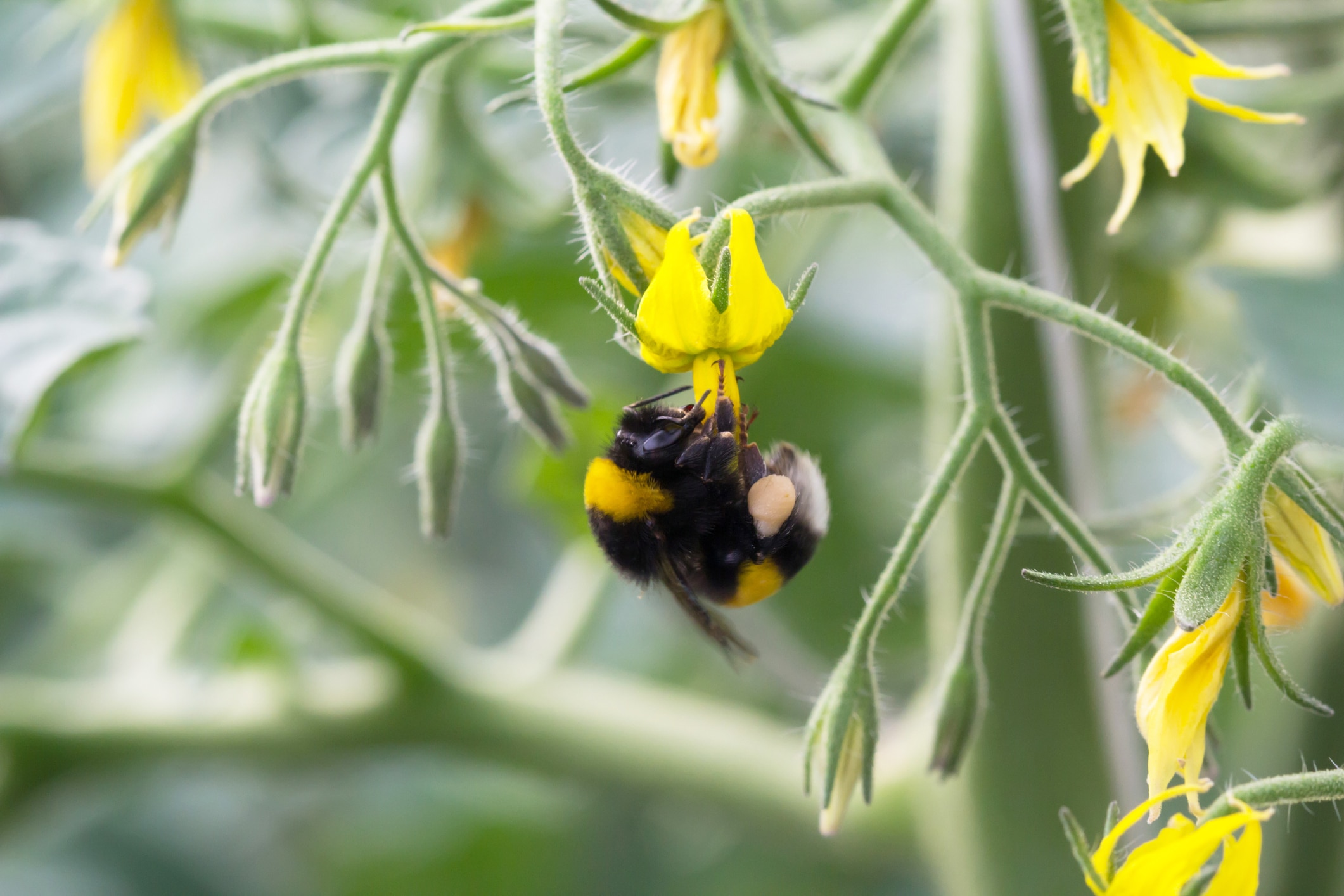
Our tomato plants need pollination so we introduce bumblebees to our glasshouses. Cucumbers are self-pollinating so don’t require our little buzzy friends to help them. Each hive is delivered containing a minimum of 80-180 bees. Over the next four weeks this little bee population grows to 250-350 bees. Whilst the amount of hives will vary during the season, we need hundreds of hives in each glasshouse to pollinate all the 450,000 tomato plants inside. We use a UK native variety of bumblebee.
Pesticides can be costly both in financial terms and to the environment, so instead of using pesticides as a standard we prefer to grow using a system of ‘predator control’ to manage problems such as greenfly and we introduce ‘good’ insects into our glasshouses that are placed amongst the crops. These ‘good’ insects then eat the pest insects that can harm the crops. We monitor to ensure pest levels are under control and adjust the predators we use accordingly.
Latest News

CLA Emsden Award 2026 – Passing on the trophy
10 July 2026
As the 2025 recipient of the prestigious CLA Emsden Trophy, it was a privilege to welcome guests to our site and share some of the biodiversity